History, cuisine, heat haze, curiosity, wine, Etna… There is much more to say about this city sheltered in the shadow of Mount Etna. Catania, which looks as if from its throne towards the Ionian Sea, is actually a medium-sized city with a metropolitan area with more than 1 million inhabitants. Although it is referred to as the second city on the island of Sicily, after its neighbor Palermo, there are accusations that it is the largest city on the island in terms of size of the metropolitan area.
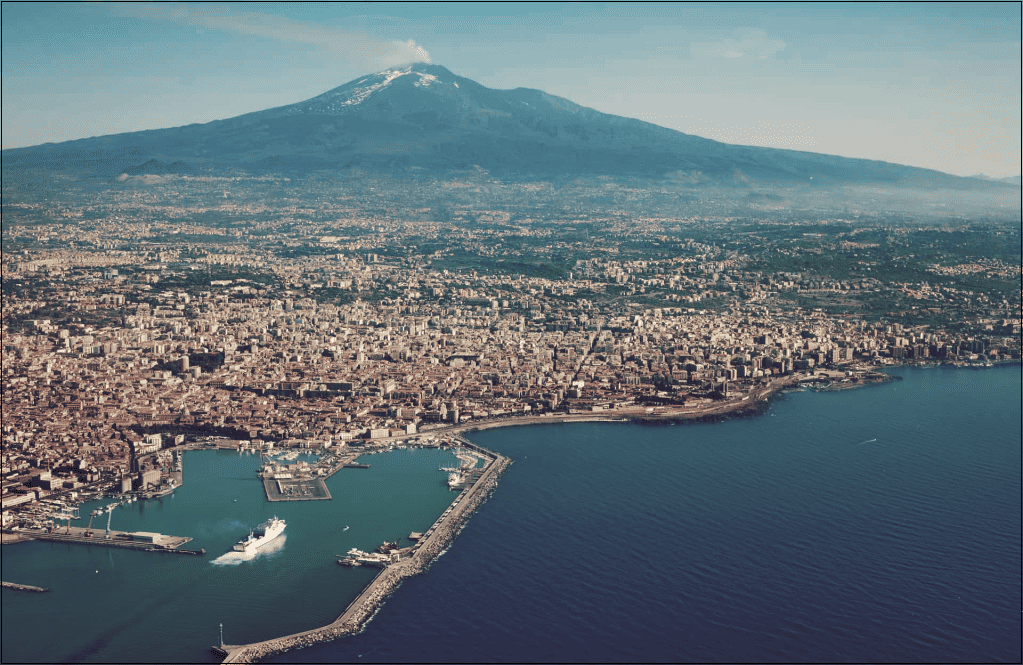
Sandwiched between the Ionian Sea on the city’s shore and Mount Etna just behind it, this settlement has been destroyed many times in history by natural disasters, especially volcanic eruptions. The city, which is located on a very active ground, was almost completely destroyed by an earthquake in 1169, was completely buried under lava in 1669 when Etna reminded it of itself, and then suffered serious damage by an earthquake again in 1693. After each destruction, the city was rebuilt with an intensive use of the most common material found in its surroundings – lava. It is a known fact that lava was used as a building material in many -built in baroque style- historical buildings. Another miraculous effect of lava on the region is the fertile soil! -which makes the grapes grown in the region quite special.
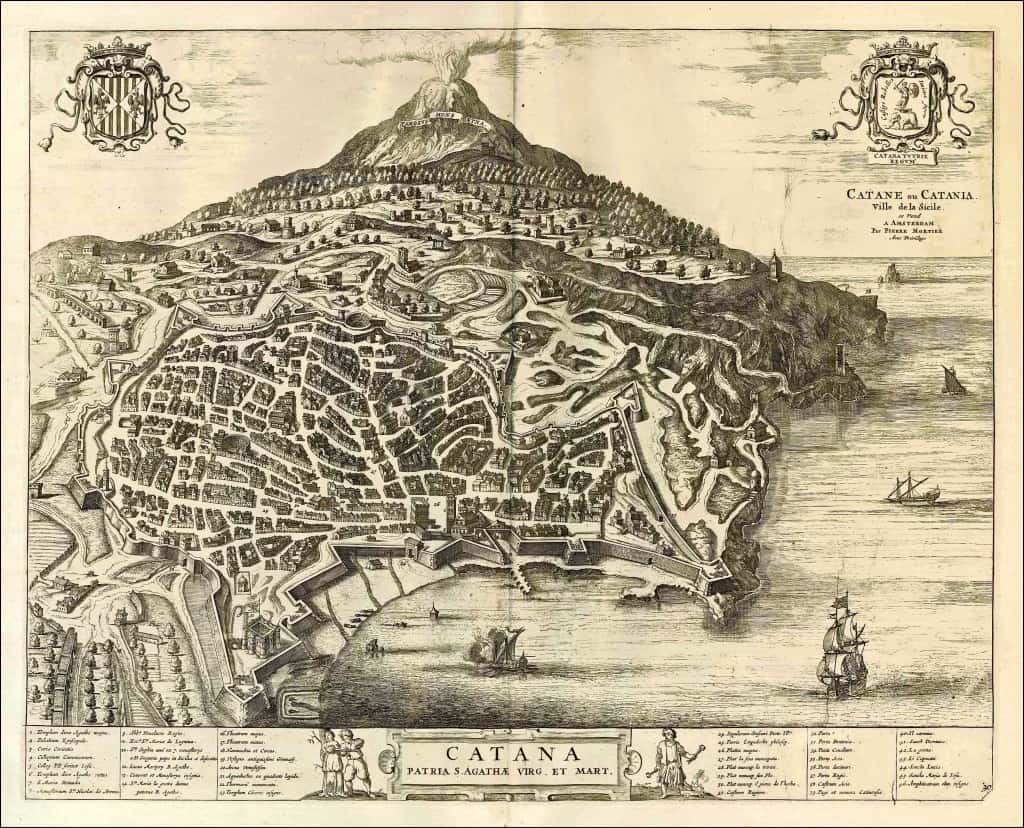
Catania, where the first known settlement dates back to 729 BC, was inhabited by a Sicilian community. It was later occupied by the Ancient Greek civilization and, after many years of rule, the city was captured by the Roman Empire around 200 BC and became an important grain port. The city was occupied many times by different civilizations afterwards, and from the 1200s AD until the Baroque period, it was heavily dominated by the Spaniards. Although it was under Spanish rule, it managed to become one of the most important centers of the Renaissance, influenced by the movement on the Italian peninsula. In the 19th century, it became part of the United Italy and has remained so to the present day. Today, the city hosts many ruins of the civilizations that lived here in the past, especially the Roman Empire, which is an important attraction for tourism.
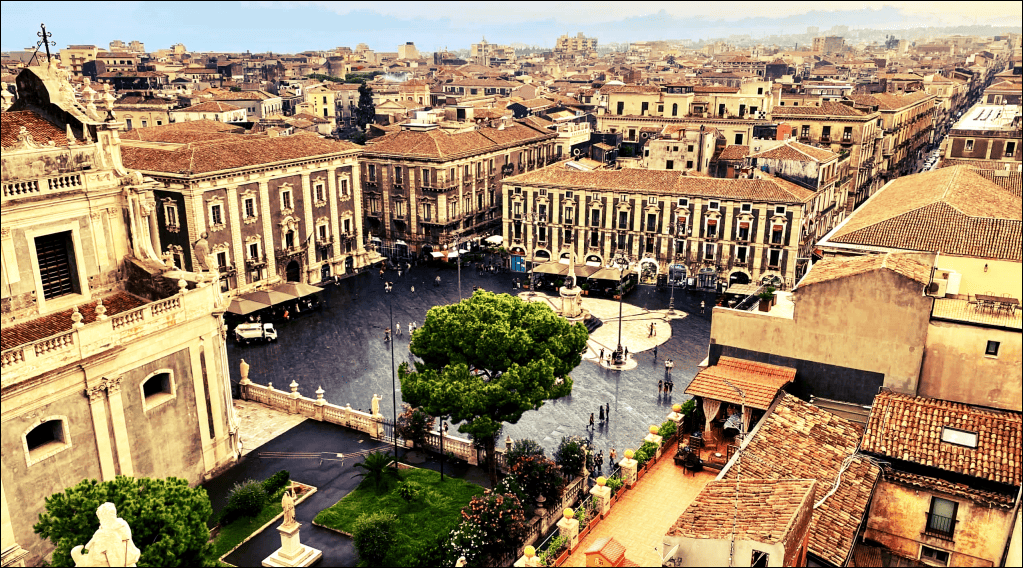
With an average age of 41, around 20% of the population is retired, very close to the Italian average. Interesting to note that the population in the center is growing slowly, as there has recently been a population migration from the city center to the surrounding suburbs. Catania, also called the industrial center of Sicily, is home to many other economic sectors such as tourism, trade and even high-tech, but it also has problems such as a high crime rate. The city, which is connected to its other neighbors on the island of Sicily, Palermo, Messina and Syracusa by train, is also an important transportation point thanks to its port.
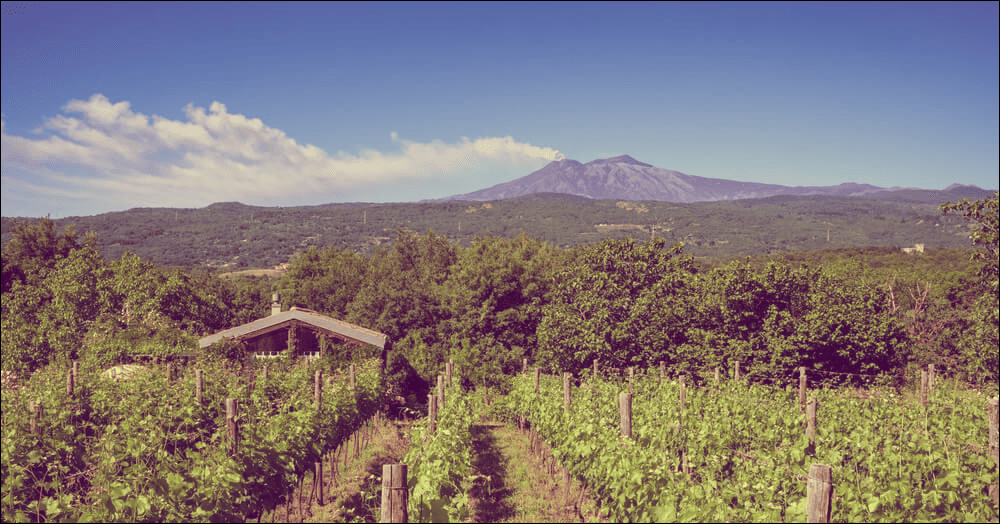
The city which has a typical Mediterranean climate, receives a large influx of oranges and almonds from the surrounding agricultural regions and exports these products. It is also famous for its wines produced from special grapes thanks to the soil fed by the lava from the Etna volcano. The cuisine, which is an indispensable part of life in Catania, is quite diverse. The local cuisine emphasizes various features of Sicilian cuisine and has developed some unique characters of its own. One of the best ways to experience this is through street food. Have you ever seen Arancini in the shape of Etna? What did you expect, could it have come from anywhere but Catania?

 Popular Geography